
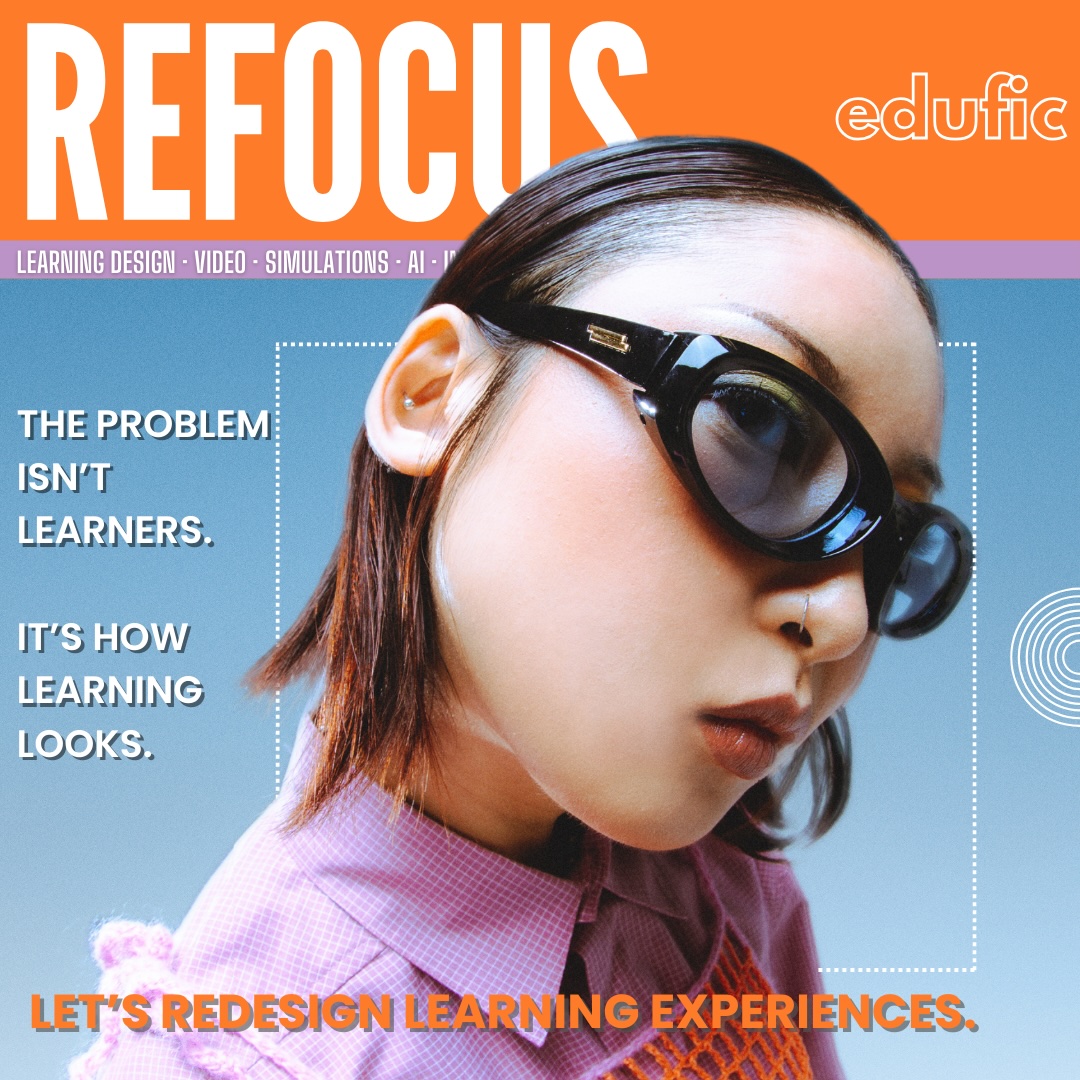

For years, corporate learning has repeated the same concern: learners today have short attention spans.
The assumption is that modern learners are distracted, impatient, or unwilling to focus. Yet the same people who struggle through a training module will happily spend hours watching a Netflix series, exploring YouTube documentaries, or playing immersive games.
Clearly, attention itself isn’t disappearing. It is simply becoming more selective.
The modern learner lives in a world engineered for attention. Streaming platforms study viewing behaviour to design stronger narrative hooks. Social media products are built around visual momentum and frictionless interaction. Games are designed to keep curiosity alive through challenge and reward.
Every part of the digital world is carefully designed to hold attention.
Corporate learning, however, often looks very different.
Many training experiences still begin with a slide that politely announces, “Welcome to this training module.” What follows is usually a sequence of slides, dense text, narration that reads the screen, and a “Next” button that moves the learner forward.
The structure is technically correct. The information is accurate. The objectives are clearly stated.
But the experience rarely invites curiosity.
In many cases, corporate learning looks less like an experience and more like a document wearing a PowerPoint costume.
When learning experiences are built primarily to deliver information, engagement becomes an afterthought. Yet learners are constantly comparing what they see in training with the experiences they consume everywhere else.
A learner who has just watched a visually rich documentary, interacted with a beautifully designed mobile app, or played an engaging game is unlikely to suddenly become enthusiastic about static slides and passive narration.
This is why the real problem is not the learner.
The problem is how learning looks.
Design matters. Presentation matters. Experience matters.
When learning is designed as an experience rather than a document, everything changes. Storytelling creates emotional connection. Visual design guides attention. Interactions encourage participation. Simulations allow learners to explore and experiment rather than simply read and remember.
Learning becomes something people move through, not something they endure.
The shift from content delivery to experience design is becoming one of the most important transformations in modern learning. Organisations are beginning to recognise that effective learning is not only about what information is included, but also about how the experience feels to the learner.
A well-designed learning experience respects the learner’s time, curiosity, and intelligence. It acknowledges that attention is earned, not assigned.
When learning experiences are visually engaging, narratively structured, and interactive by design, learners naturally stay involved. Engagement is no longer forced through compliance or obligation. It happens because the experience is worth continuing.
This shift requires a different mindset.
Instead of asking, “What information do we need to include?”, learning designers begin to ask a different question: “What experience will make someone want to keep going?”
The answer to that question changes everything.
It changes how content is structured. It changes how visuals are used. It changes how learners interact with the material. Most importantly, it changes how learning feels.
The future of learning will not be defined by the volume of information delivered. It will be defined by the quality of the experience created.
Because when learning looks engaging, curiosity follows.
And when curiosity appears, learning happens naturally.
The problem was never the learner.
It was always how learning looked.
#CustomLearning #SeriousGames #SoftSkills #LMS #TrainingSolutions #OnlineLearning #LifelongLearning #Gamification #CorporateTraining #EdTech #GenerativeAI #ContentCreation #InstructionalDesign #OnlineCourses #EducationForAll #LearningJourney #Elearning #EduficDigital #Edufic www.edufic.com @eduficdigital